
What it is
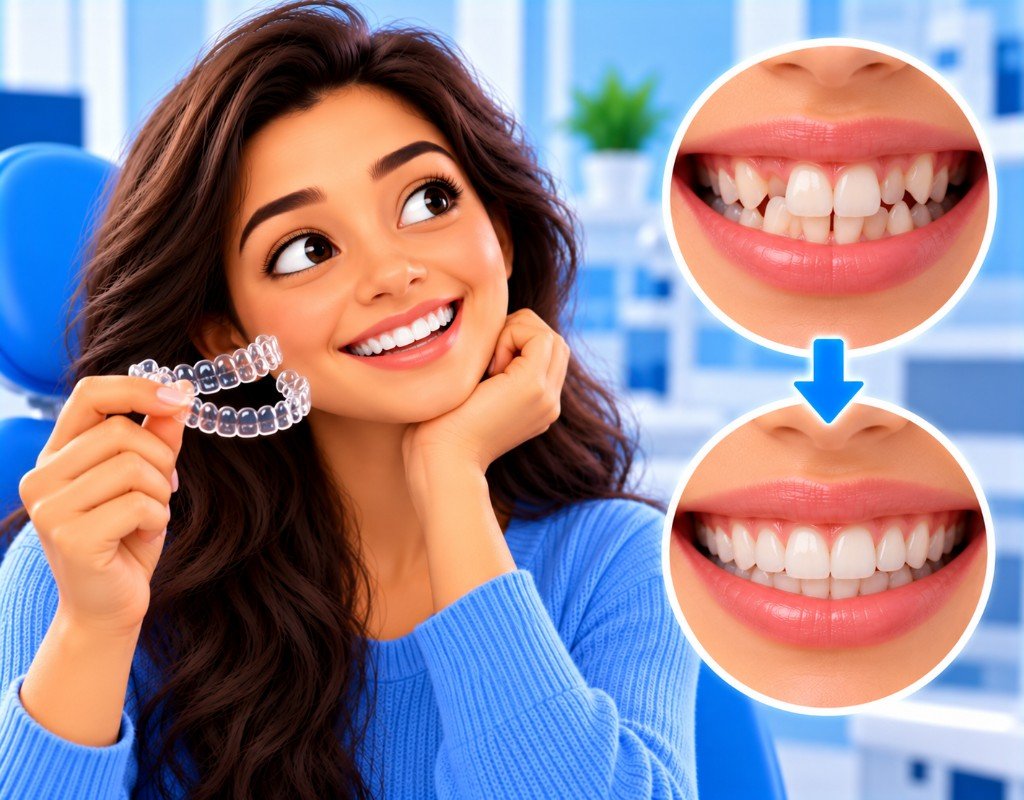
Clear aligners are a series of custom trays that gradually move teeth.
Clear Aligners
Learn how clear aligners work, who they may suit, and why wear time and an in-clinic exam matter more than a shopping-cart plan.
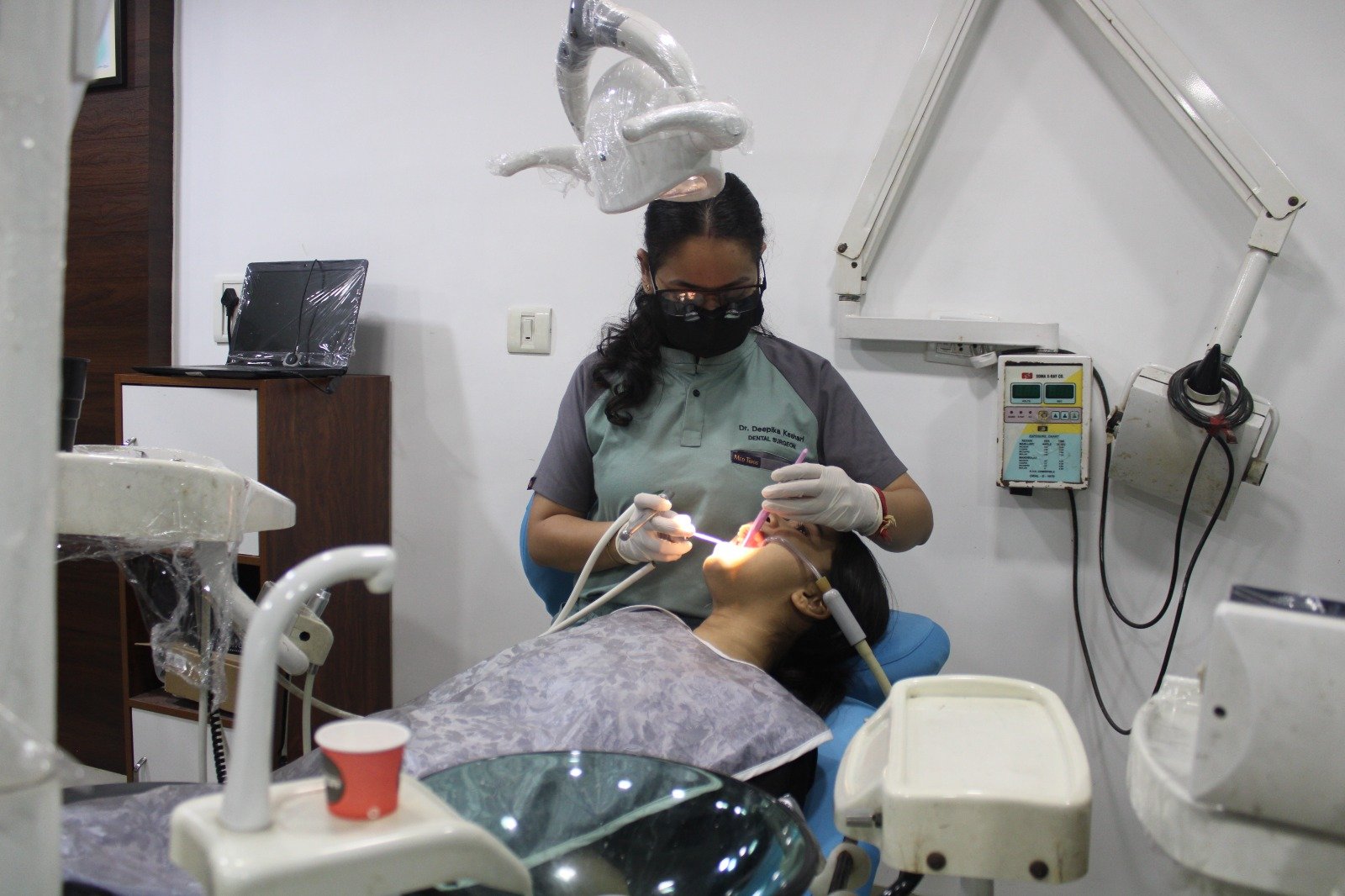
Clear aligners are a series of custom trays that gradually move teeth. They are less visible than metal braces and are removed for eating, but they only work if worn as prescribed. They are not suitable for every bite problem.
Clear aligners are a series of custom trays that gradually move teeth.
Mild to moderate crowding or spacing is often considered.
Attachments are often bonded.
Typical wear is 20–22 hours.
Refinement scans if teeth have not tracked.
Select your concern.
Mild to moderate crowding or spacing is often considered. Complex skeletal bites, large rotations or poor compliance may mean braces are more predictable.
Clear aligners are a series of custom trays that gradually move teeth. They are less visible than metal braces and are removed for eating, but they only work if worn as prescribed. They are not suitable for every bite problem.
Digital scans, a staged plan, attachments on teeth in many cases, and a series of trays. Missed wear time extends treatment.
A dental consultation and records can help determine whether braces, aligners or monitoring may be appropriate.
A dental consultation and records can help determine whether braces, aligners or monitoring may be appropriate.
A dental consultation and records can help determine whether braces, aligners or monitoring may be appropriate.
A dental consultation and records can help determine whether braces, aligners or monitoring may be appropriate.
Clear aligners are a series of custom trays that gradually move teeth. They are less visible than metal braces and are removed for eating, but they only work if worn as prescribed. They are not suitable for every bite problem.
Mild to moderate crowding or spacing is often considered. Complex skeletal bites, large rotations or poor compliance may mean braces are more predictable.
Digital scans, a staged plan, attachments on teeth in many cases, and a series of trays. Missed wear time extends treatment.
Whether this treatment is appropriate depends on individual clinical evaluation.
Aligners typically need 20–22 hours of wear. Attachments are often required. Trays in a drawer do not move teeth.
Mild to moderate crowding or spacing is often considered. Complex skeletal bites, large rotations or poor compliance may mean braces are more predictable.
Typical wear is 20–22 hours.
Large skeletal problems and some rotations are more predictable with braces.
They skip in-person diagnosis of decay and gum disease. The Dental Hut assesses you in clinic first.
What are clear aligners? Removable transparent trays used to move teeth in planned stages.
Are clear aligners suitable for everyone? No. A clinical assessment decides whether the required movements can be achieved predictably with trays.
Are they the same as invisible braces? No. They are a different system from braces, not merely ‘invisible braces’.
You describe what is bothering you and share medical and dental history. Questions come before any treatment is planned.
Cavities and gums are treated first. Not every bite that looks mild in a mirror is mild on a model.
Findings are explained in plain language. Imaging is used when the extra detail is likely to change the plan.
Options, likely visits, aftercare and alternatives are discussed so you can decide.
Attachments are often bonded. Trays change on a schedule. Lost trays delay care.
Refinements may be needed. Retainers still follow.
Not every bite can be treated predictably with trays.
Digital scans and a staged sequence are prepared when you are a candidate.
Trays are worn as prescribed, often 20–22 hours a day. Attachments are common.
Fit and tracking are reviewed. Trays in a drawer do not move teeth.
Retainers follow active treatment to help hold the result.
You take them out to eat and clean.
Attachments still show up close.
Typical wear is 20–22 hours.
Large skeletal problems and some rotations are more predictable with braces.
They skip in-person diagnosis of decay and gum disease. The Dental Hut assesses you in clinic first.
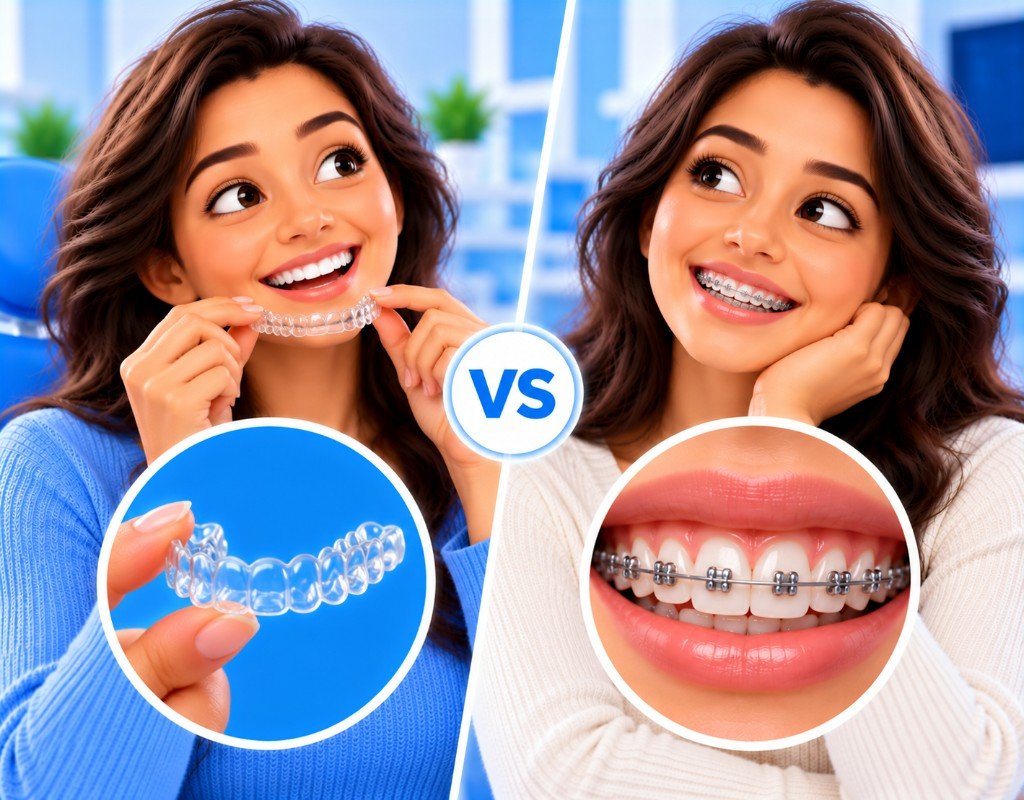
Clear aligners versus braces.
| Topic | Clear aligners | Braces |
|---|---|---|
| Purpose | Selected tooth movements with worn trays | Fixed movement with brackets and wires |
| Typical process | Scan, attachments, sequential trays | Fit and adjustments |
| Considerations | Compliance and attachments | Hygiene around brackets |
The Dental Hut in Airoli has in-house CBCT and OPG. Imaging may assist evaluation when it is clinically required. It is not a scan for every patient.
Cone-beam CT creates a 3D volume of teeth and jaws. It may be used for implant channels, some impacted teeth and selected endodontic questions.
An OPG is a 2D panoramic X-ray of both jaws. It is often enough for a broad survey of teeth, wisdom teeth and jaw relationships.
A clinical examination of teeth, gums and bite remains the starting point. Imaging is added only when extra detail is likely to change the plan.
Follow the instructions provided by your dentist.
Wear the current tray unless you were told to start the next one.
Report attachments that fall off. Do not skip days of wear.
Retainers. Aligners are not a reason to skip gum reviews.
Refinement scans if teeth have not tracked.
Consider getting in touch if you notice:
Fees are quoted after examination.
Book a consultation to discuss your dental condition and treatment options
Every dental case is different. A consultation allows the dentist to evaluate your dental condition and discuss appropriate treatment options.

BDS · Dentist, Implantologist & Dental Surgeon
MSDC A-30506. Founder of The Dental Hut. BDS from Datta Meghe Institute of Medical Sciences, Wardha (May–June 2014 examination).

BDS · Dentist
MSDC A-30777. Co-founder of The Dental Hut. BDS from Datta Meghe Institute of Medical Sciences, Wardha.
I consulted The Dental Hut regarding clear aligners in Airoli. I wanted to understand whether clear aligners would be suitable for my dental concerns. The dentist explained the treatment process, follow-ups and important considerations clearly. I appreciated the detailed consultation and patient-friendly approach.
Pooja More
Removable transparent trays used to move teeth in planned stages.
No. A clinical assessment decides whether the required movements can be achieved predictably with trays.
No. They are a different system from braces, not merely ‘invisible braces’.
They can be if the case qualifies and you accept attachments, wear time and retainers.
Speed follows biology and compliance, not the brand of tray.
Usually they are removed for meals, then brushed before they go back in.
Often yes. They are tooth-coloured bumps bonded on.
Suitability is confirmed at The Dental Hut in Airoli after orthodontic assessment—not from a remote kit alone.
Request a visit on the contact page, call +91 84519 22257, or WhatsApp. The clinic confirms a slot during Monday–Saturday working hours.
The Dental Hut is a dental clinic in Airoli, Navi Mumbai, providing consultations and dental treatments for a range of oral health concerns.
If you are looking into clear aligners in Airoli, you can meet the dentists, read dental FAQs, or request a visit.
Dentist in Airoli · Dentist in Navi Mumbai · Dental clinic in Airoli
Have questions about your dental condition or this treatment? Book a consultation with The Dental Hut to discuss your concerns and understand the available options.
Monday–Saturday · 10:00 AM–1:50 PM and 5:30 PM–9:50 PM. Sunday closed. Plot B/21, opp. Apple Hospital, Sector 7, Airoli 400708.
 Braces
Learn more about braces in Airoli
 Cosmetic Dentistry
Learn more about cosmetic dentistry in Airoli
 Smile Designing
Learn more about smile designing in Airoli